Monday.com
monday HR Software Singapore — Onboarding, Leave & Recruitment
monday HR Software Singapore — Onboarding, Leave & Recruitment
Couldn't load pickup availability
monday.com HR software in Singapore, configured by a certified monday.com partner in Singapore to handle recruitment, onboarding, leave, and performance reviews in one workspace your team will actually open.
HR work is mostly coordination, and coordination is what falls apart at scale.
- Onboarding checklists triggered by an accepted offer — IT, payroll, and manager tasks assigned automatically
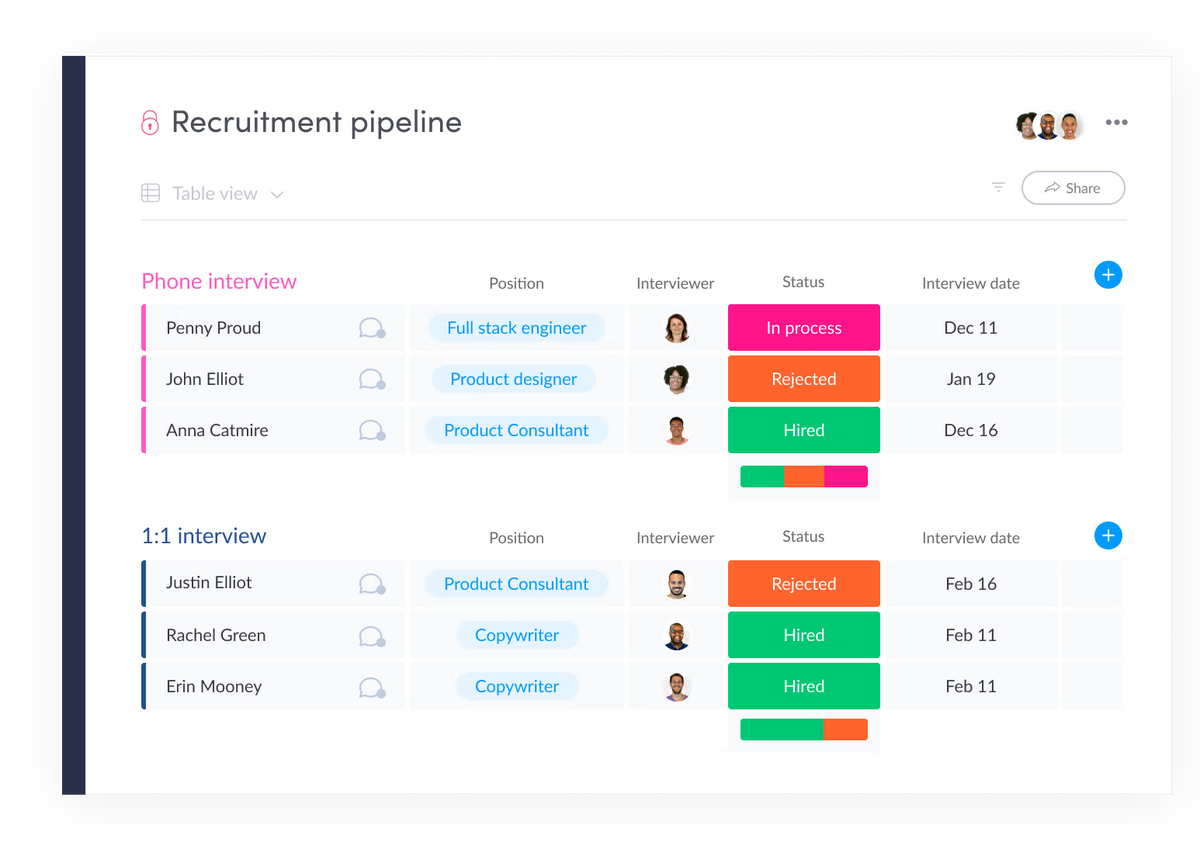
- Recruitment pipelines with interview feedback attached — candidate status visible to hiring managers without a status meeting
- Leave requests, approvals, and balances — routed to the right approver, tracked without a parallel spreadsheet
- Performance review cycles on schedule — launched, reminded, and collected without manual chasing
- Permission controls for sensitive data — HR sees everything, managers see their own team
- Offboarding sequences — access revocation and handover tasks that do not get forgotten
Employee Onboarding From Offer Letter to Day One
A new hire needs a laptop from IT, a payroll record from finance, an induction from their manager, and access to six systems all in the same week. When that lives in someone's inbox, things get missed, and the miss is visible to the person on their first day.
We build the sequence once. An accepted offer triggers the tasks, assigns them to the right owners with the right deadlines, and shows HR a single view of where every incoming hire stands. IT sees only their queue; the hiring manager sees only theirs.
The template adapts by role and location, which matters if you are hiring across Singapore, Malaysia, and the rest of the region; different documentation, different statutory steps, same underlying flow.
Recruitment Pipelines and Candidate Tracking
Candidates move through a visible pipeline with interview feedback attached to the record, so hiring managers stop asking who is at what stage and HR stops assembling status updates by hand.
Feedback captured on the record rather than over email is the part that changes hiring quality. When three interviewers have each written against the same criteria, the debrief starts from evidence instead of impressions, and you have a defensible trail if a decision is ever questioned.
Time-in-stage is visible too, which surfaces the real bottleneck. Usually it is not sourcing. It is the gap between a candidate being available and an interview panel finding a slot.
Leave Requests, Approvals, and Balances
Leave requests route to the right approver and update balances without a separate tracker. The requester sees their remaining entitlement before submitting, which removes most of the back-and-forth.
Team calendars show approved leave in one place, so managers can see coverage before approving rather than discovering a clash afterwards. For teams working across several markets, public holidays differ by country, and the calendar reflects that instead of defaulting to one.
Entitlement rules, carry-over, and accrual are configured to your policy.
Performance Reviews and Check-In Cycles
Review cycles launch on schedule, with reminders that go out for you. Self-assessment, manager review, and sign-off each have a stage, so HR can see completion rates live rather than chasing a spreadsheet in the final week.
Lighter check-ins work on the same structure at a shorter interval, which is where most of the value sits. A quarterly or monthly conversation logged against the employee record makes the annual review a summary rather than an archaeology exercise.
Goals carry across cycles, so what was agreed in the last review is visible during the next one.
Keeping Employee Data Private Inside Shared Boards
Sensitive employee data stays restricted through board permissions and private columns. HR keeps full visibility, managers see their own team, and employees see their own record; on boards that still connect to the rest of the business.
That last part is what makes this workable rather than a walled-off HR silo. The same permission logic applies when HR data needs to connect to project management workspaces; resourcing needs to know who is available without exposing salary or review records.
Offboarding closes the loop: access revocation, equipment return, and handover tasks run as a sequence, so a departure does not leave an active account behind.
Worth drawing a line here: this page covers the employee lifecycle you run. The inbound questions employees send you; payroll queries, policy clarifications, access requests are a different problem, handled by a service desk for employee requests.
Share